

The Search Nobody Wants to Run
How a high-risk pregnancy specialist took ownership of the scariest moment in a patient's week

Client Overview
Dr. David L. Principe is a double board-certified OB-GYN and maternal-fetal medicine specialist practicing in Clifton, New Jersey. Over more than twenty years he has managed pregnancies most physicians refer out, delivering at St. Joseph's Regional Medical Center, CarePoint Health, and Englewood Hospital.
Project Scope
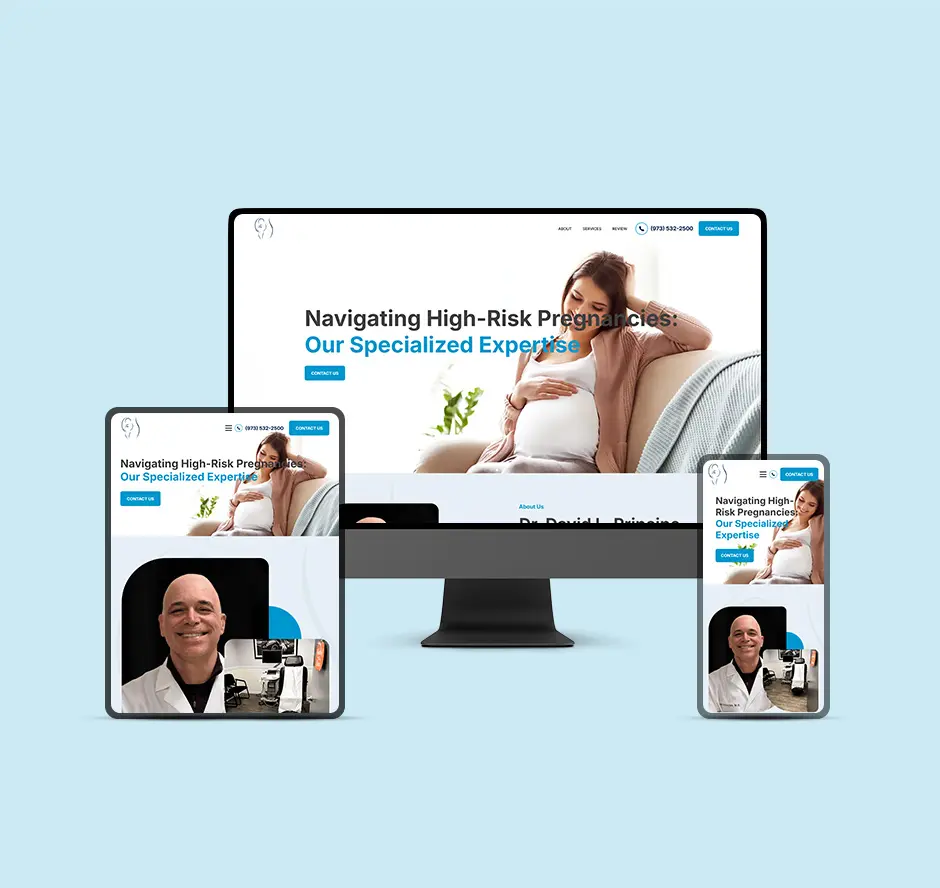
JHD designed and built the practice's website — the first digital home Dr. Principe actually controlled. The engagement covered structure, messaging, and build, and ended at launch. No retainer, no ongoing campaign. One asset, built to stand on its own.

Challenge and Innovation
The reputation was never in question. It was verifiable in minutes: 127 reviews, 4.6 stars, patients describing care that changed the course of a pregnancy. But every word of it lived on someone else's platform, stacked next to ads for competing practices. And the person doing the searching is rarely calm. She was told this morning that her pregnancy is high-risk. A directory listing can confirm credentials. It cannot lower a heart rate.
JHD Solution
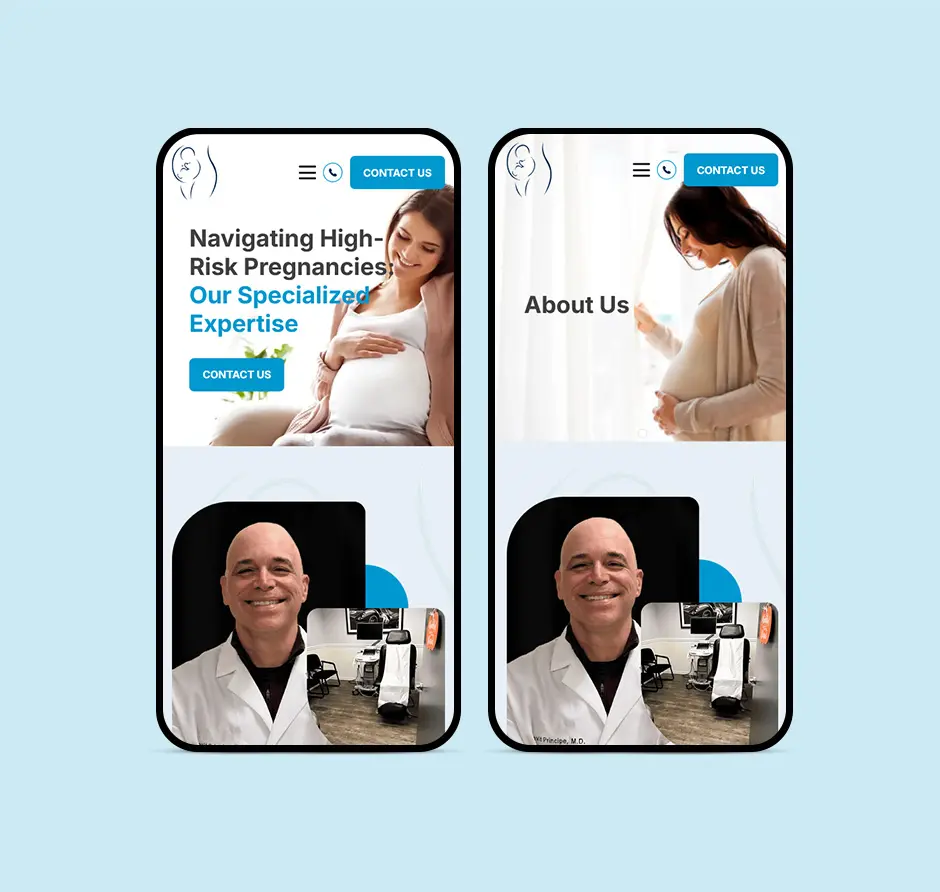
The obvious move was to lead with everything — gynecologic care, fertility preservation, nutrition, primary care. We led with the hardest thing instead. Plenty of practices in North Jersey offer comprehensive women's health. Very few are run by a dual board-certified perinatologist. Narrowing the front door made the practice legible to the two audiences that matter: frightened patients, and the OBs who refer them. We also named the conditions out loud — preeclampsia, gestational diabetes, incompetent cervix, autoimmune disorders — because those are the words patients type at midnight, and seeing your own diagnosis on the page does what a services list never will.

Impact and Expansion
There's no dashboard on this one. The engagement ended at launch and we've had no ongoing visibility, which is worth saying plainly rather than dressing up. What changed is structural, and structure is what compounds. The first impression now belongs to the practice instead of a directory. A referring physician has a single link to send instead of a phone number and a hope. And the architecture leaves room to grow into — the women's health, fertility, and nurse practitioner lines each have a place waiting when the practice is ready to fill it.
Conclusion
A website cannot make a doctor better at his job. Dr. Principe was already the person you want in the room on the worst day of a pregnancy — his patients were saying so long before we showed up. What the site does is make that clear before the first appointment, to a patient who is scared and a referring physician who needs somewhere to point. The trust was already earned. Now it lives somewhere he owns.