
Four Different Yeses
How Heart Attack Ethiopia built one site that asks a donor, a hospital, a surgeon, and a manufacturer for entirely different things
Client Overview
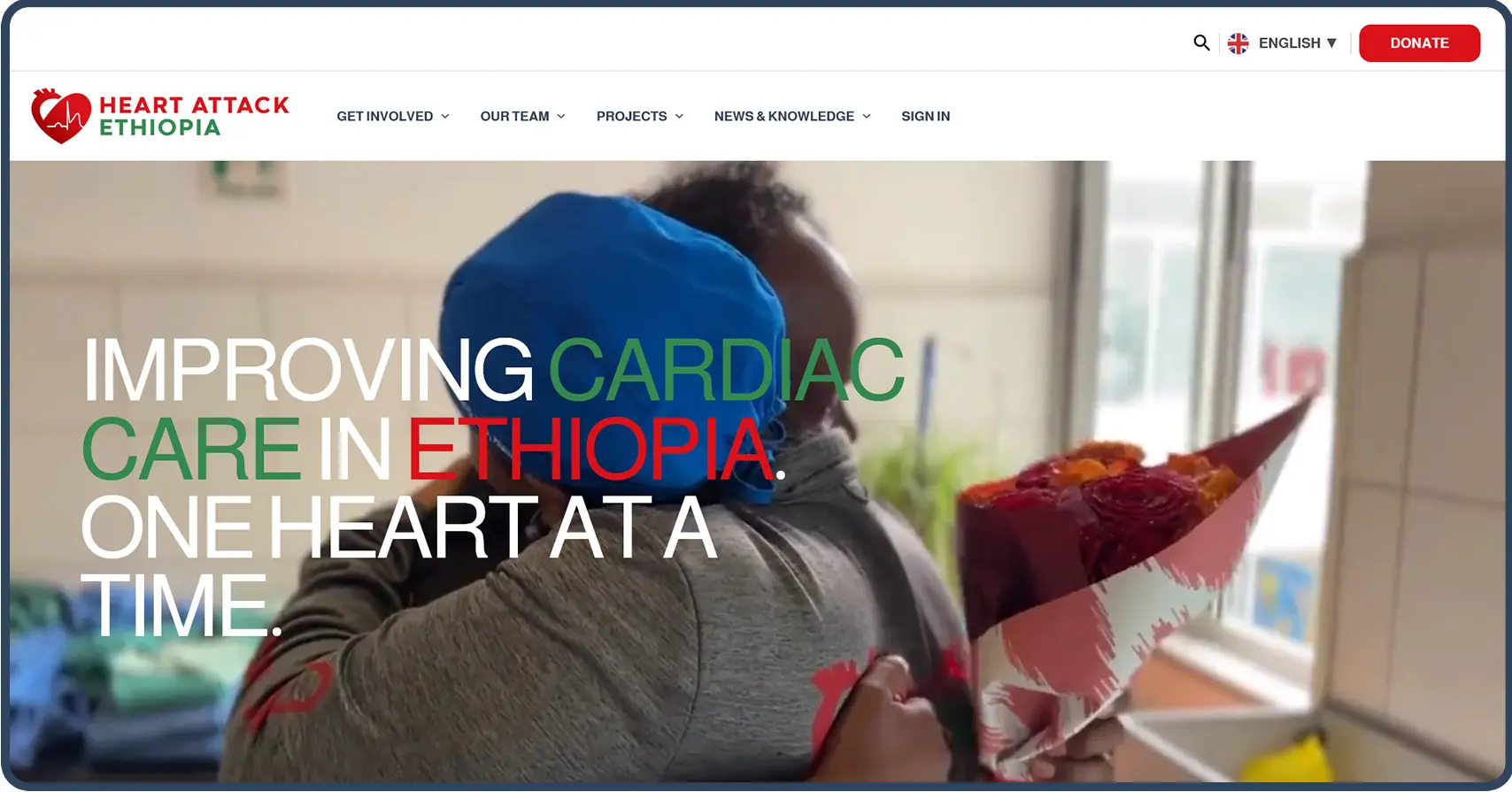
Heart Attack Ethiopia is a 501(c)(3) founded by two Ethiopian-American physicians working to end premature cardiovascular death in Ethiopia and across Africa. The country has fewer than 45 practicing cardiologists and five cardiac surgeons for 130 million people, and roughly 15,000 patients waiting on procedures that already exist everywhere else.
Project Scope
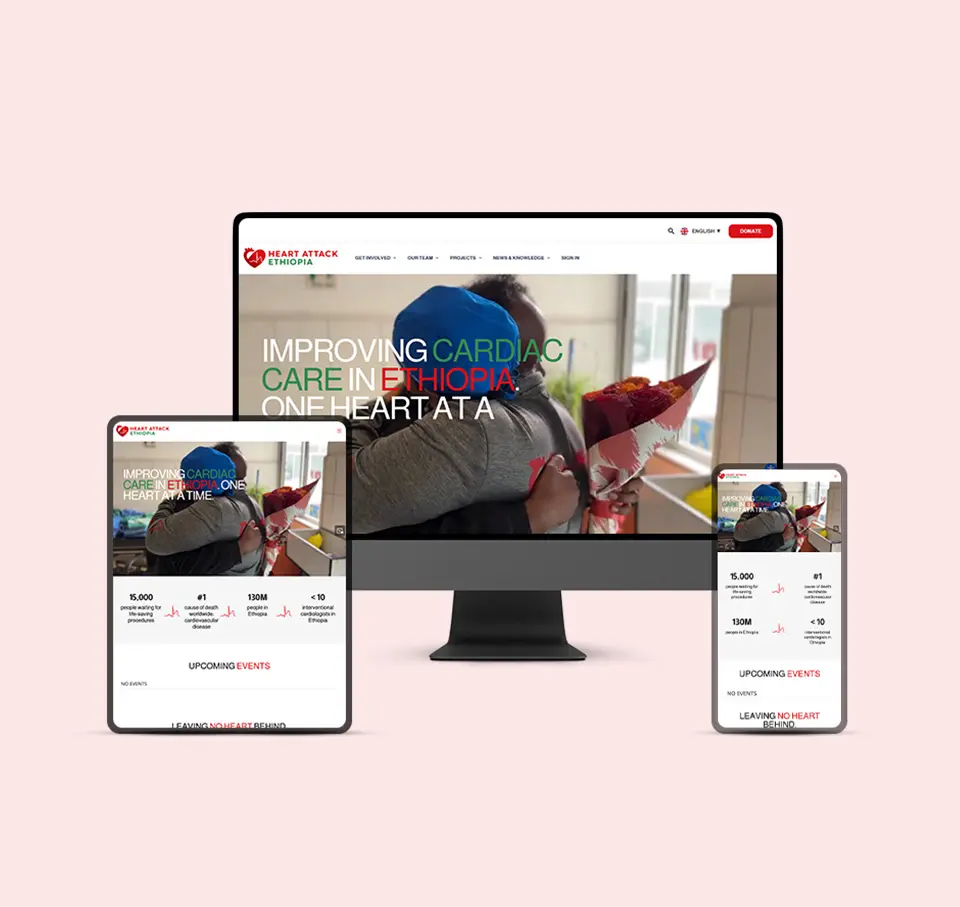
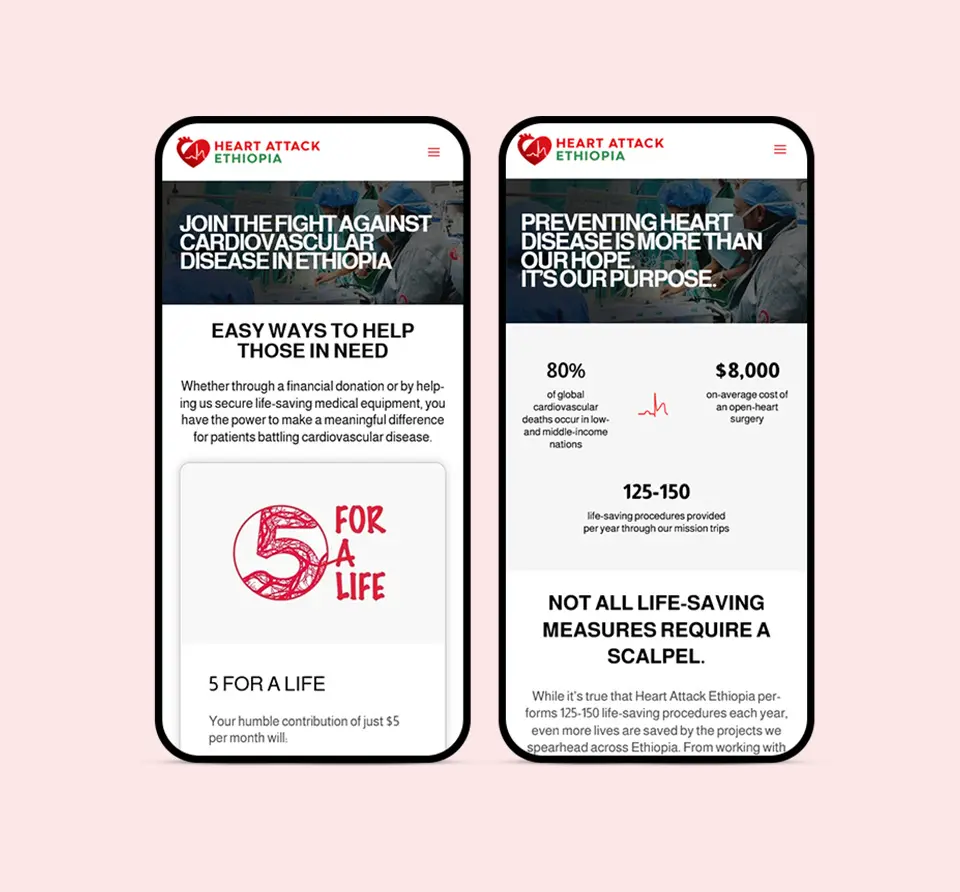
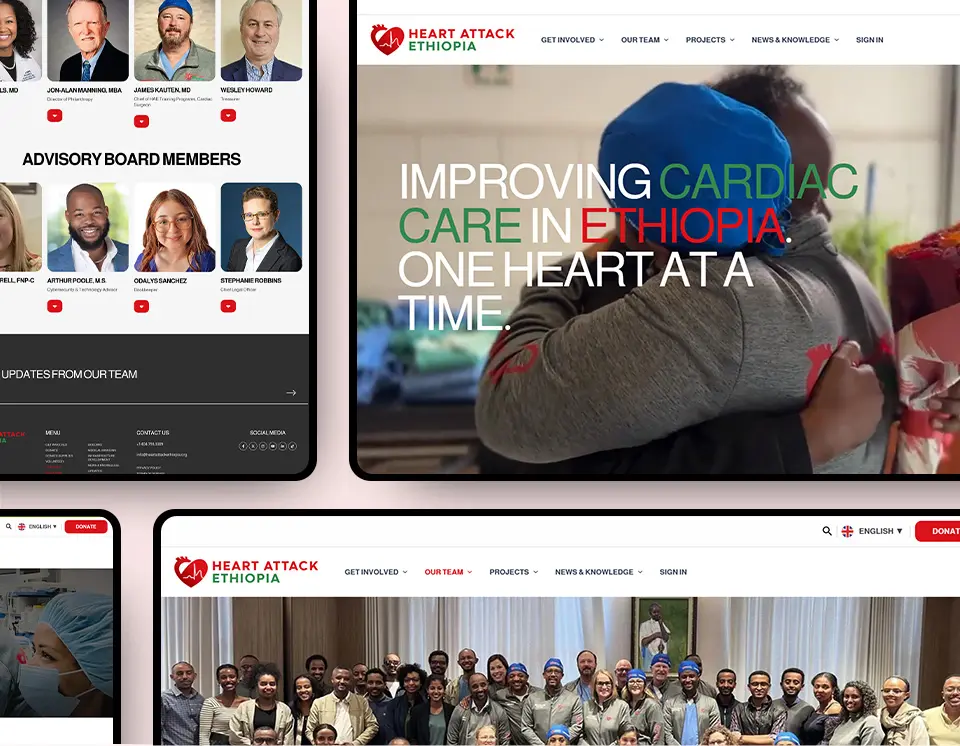
JHD designed and built the organization's website from the ground up and continues to develop it as programs expand. The build spans donor giving in two currencies, a medical supply intake pipeline, fellowship application tracks, volunteer recruitment, and a partner-facing presentation of nine active programs across four Ethiopian hospitals.

Challenge and Innovation
A generic nonprofit site asks one question: will you give? Heart Attack Ethiopia needed four answers from four audiences who share almost nothing. A diaspora donor in Atlanta sending $5 a month. A hospital supply director in Ohio with usable inventory and no idea how to ship it. An Ethiopian anesthesiologist deciding whether to commit two years to a fellowship. A device manufacturer weighing whether this organization is real. Point all four at the same donate button and you lose three of them.
JHD Solution
We built the site around those four yeses instead of around a donation form. Giving runs on two rails — Zeffy for USD, Chapa for Ethiopian birr — because a diaspora donor and a local donor cannot use the same checkout, and the $5 "5 For A Life" monthly ask sits separate from one-time giving so recurring support reads as a commitment rather than an amount. Supply donation became a structured intake form that captures supply category, expiration date, and receiving institution, turning a well-meaning email into a shippable record. The fellowship tracks are published in full — ten programs, 12 and 24 months, physician and allied health — with the next cohort date stated plainly, so a surgeon can evaluate the commitment without a single conversation. And rather than describe the work in the abstract, we put the mission ledger on the page: 32 procedures in February 2024, 101 that August, 81 in January 2025, 165 across three sites by July. Partners like the Federal Ministry of Health, Amrita University, Mayo Clinic, Abbott, and Ethiopian Airlines appear alongside those numbers, where a procurement officer will actually weigh them.
Impact and Expansion
The site now carries institutional weight the organization has earned. Named partnerships with the Federal Ministry of Health of Ethiopia, Amrita University in India, Myungsung Comprehensive Specialized Hospital, Tikur Anbessa Specialized Hospital, and corporate medical partners including Abbott and Boston Scientific are presented as verifiable relationships, not logos on a wall. More than 600 global volunteers now come through a single application path. Because the structure separates audiences rather than blending them, adding a program — the cardiovascular center at Myungsung, a new mobile clinic initiative, a reopened cohort — is an expansion of an existing pattern, not a rebuild. JHD continues to build with the organization as that footprint grows.
Conclusion
When a nonprofit's real bottleneck is trained specialists and institutional trust, a website optimized purely for donations quietly fails at its most important job. We designed for the harder yeses first — the surgeon, the ministry, the manufacturer — and the giving got clearer as a result. Heart Attack Ethiopia does work most organizations only describe. The site had to be able to prove it.